
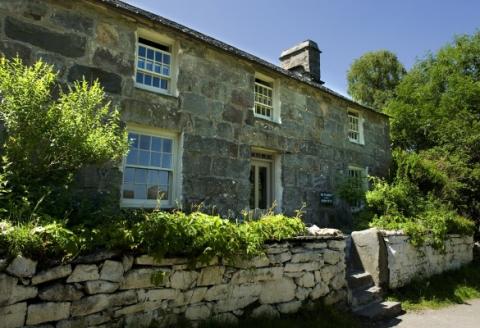
Alongside Siegfried Sassoon, Wilfred Owen and Robert Graves, Hedd Wyn is one of the UK’s most important First World War literary figures who poignantly captured the horrors and disillusionment of the Great War through poetry.
From a poor Welsh farming family and self-taught, Hedd Wyn (born Ellis Humphrey Evans) achieved early literary success. His greatest poem Yr Arwr (The Hero), was written just a few months before he was tragically killed at the Battle of Passchendaele in 1917. It went on posthumously to secure him the bardic chair, the highest honour for poetry, at that year’s National Eisteddfod. In a moving ceremony attended by the Prime Minster David Lloyd George, his empty bardic chair was draped in black cloth. Delivered to his parents at home at Yr Ysgwrn, it became known as the Black Chair and became a poignant symbol of Wales’s lost generation, representing every empty chair across the nation where a son had not returned from the war.
The Black Chair, along with five other bardic chairs previously awarded to Hedd Wyn, now belongs to the nation as part of the contents of the Grade II* listed house. The building, preserved entirely as it was in the poet’s lifetime, is a rare survival, reflecting its precise domestic arrangement in the early 20th century.
The property was at risk of being dismantled and sold on the open-market when the former owner was unable to continue farming the land. Now, with our grant and support from the Welsh Government, Snowdonia National Park Authority has been able to step in to acquire it via a private sale and ensure it can remain intact and open to the public.