
The Landmark Trust has been awarded £5.3million, saving the Category A building, and the heritage it represents, from being lost forever.
A fascinating story
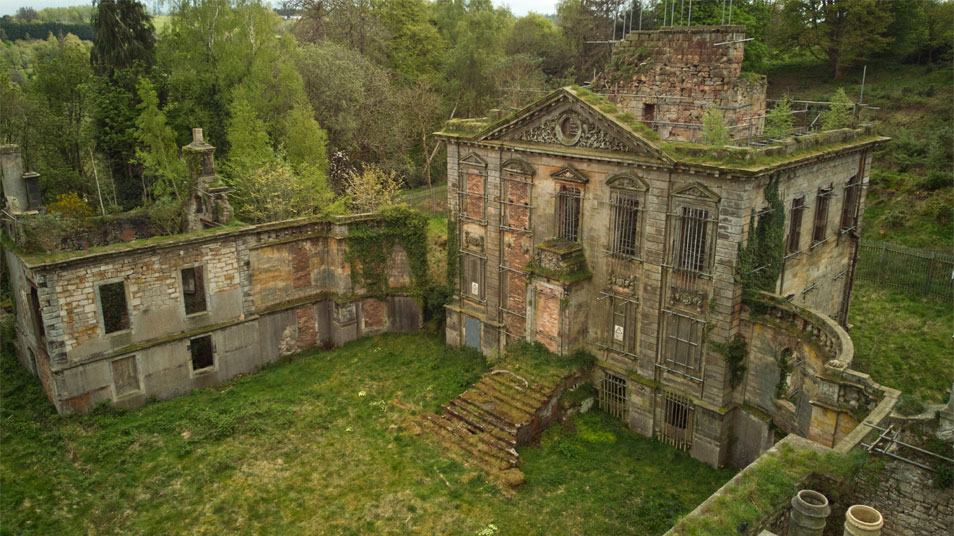
Mavisbank House, just outside Edinburgh, was built by celebrated Scottish architect William Adam in 1723. The house was a summer residence for John Clerk of Penicuik, a leading figure of the Scottish Enlightenment, and signatory of the Act of Union (1707), whose European travels provided the inspiration for its design.
Mavisbank was a pioneering example of a neo-Classical style which William Adam’s son Robert Adam and others would develop for Edinburgh’s New Town a generation later. Mavisbank was built by a workforce of outstanding Scottish craftspeople whose names and individual contributions are recorded in remarkable detail in the surviving archive.
In the 19th century, Mavisbank became a ground-breaking mental hospital where reforming Doctor John Batty Tuke developed compassionate approaches to mental illness, including through exercise and gardening. His work to reform the national Lunacy Laws in Parliament helped stop those with poor mental health being regarded as ‘psychological curiosities’ but treated instead as sufferers of illnesses that might be understood and cured.
After the closure of the asylum, Mavisbank was sold and, following a major fire in 1973, it was at risk of demolition. However, volunteers staged an emergency round-the-clock vigil until the decision could be halted. Since then, a number of attempts have been made to secure funding to save the building.
A brighter future
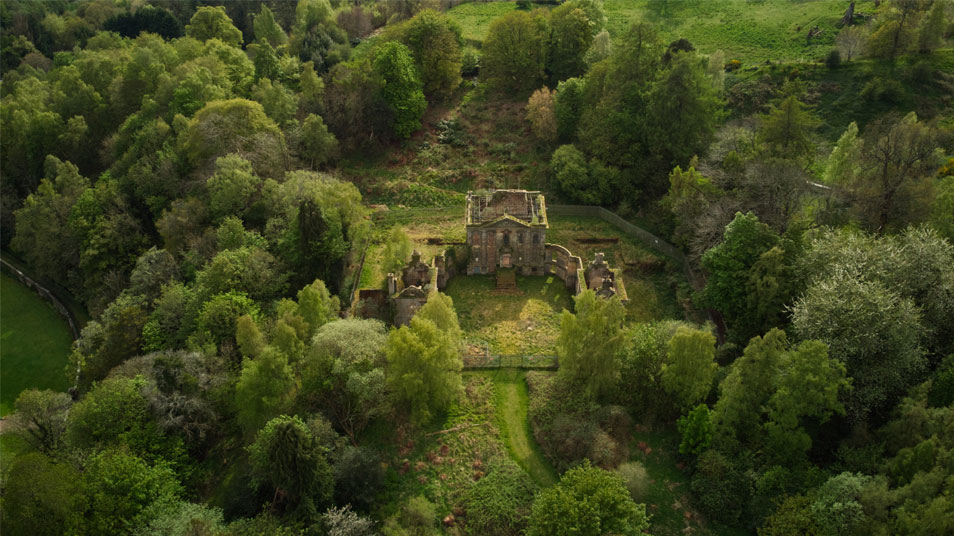
Now, the Landmark Trust have been awarded £5.3m of our funding to support the purchase of the house, re-establish public and vehicular access via an access road and carry out vital work to stabilise the building.
This funding is the first step in the Landmark Trust’s ambition to use Mavisbank House for residential stays and other uses for public benefit.
The Landmark Trust specialises in saving historic buildings at risk and giving them new life. With our support, this important place can now move towards long-term conservation and public access, ensuring people across the UK can experience and learn from a remarkable part of Scotland’s heritage.
Find out more about the many projects we have supported since 1980.