
Finally reunited
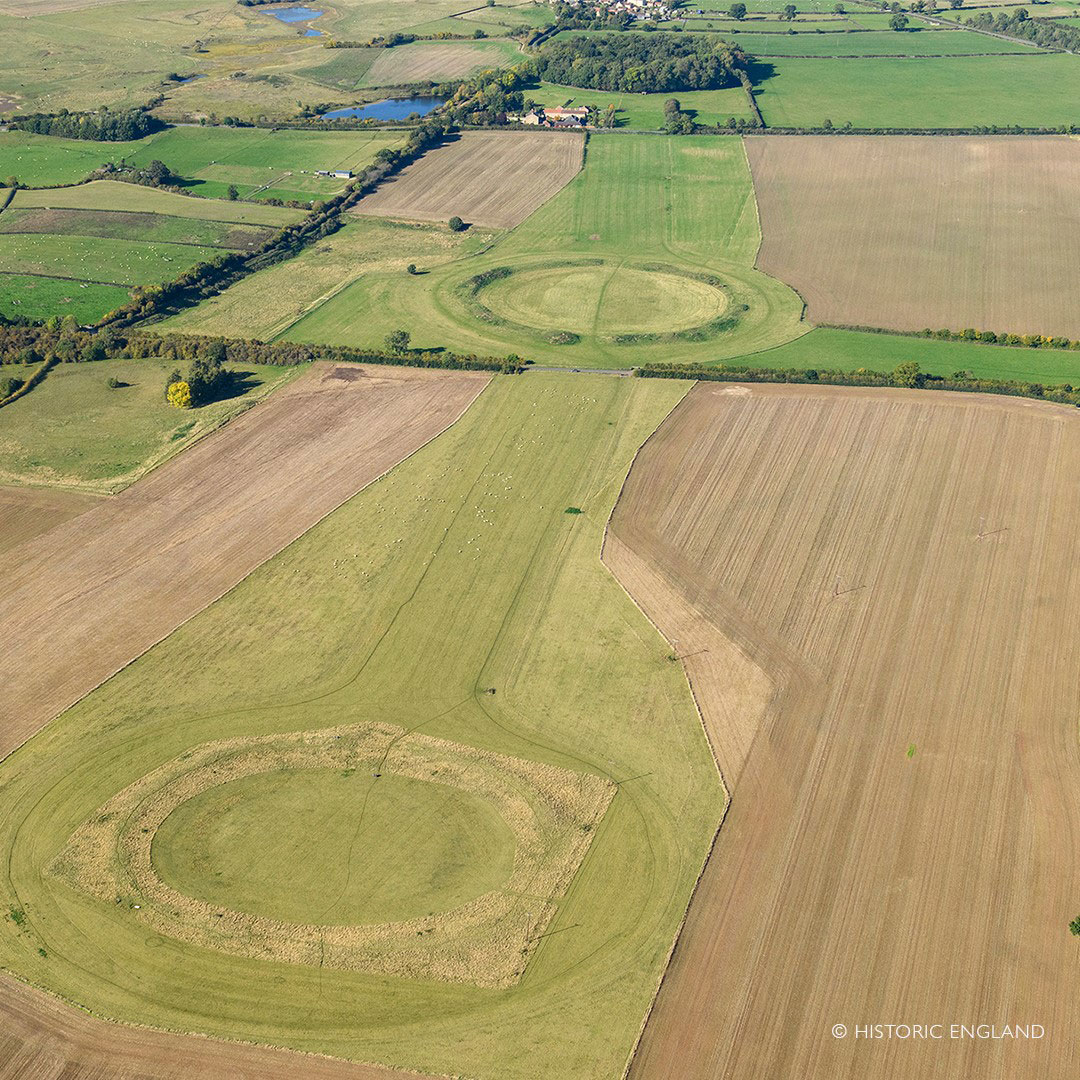
Thornborough Henges in North Yorkshire is now finally reunited. English Heritage has acquired Thornborough’s northern henge, thanks to our grant of £150,000 and support from other donors.
English Heritage already owns the central and southern henges and the purchase of the northern henge places the monument under one single owner for the first time in many years.
Thornborough Henges – in its entirety – now joins Stonehenge, Iron Bridge, Dover Castle, Kenwood and numerous Roman sites on Hadrian’s Wall within the National Heritage Collection, under the care of English Heritage. Entry to Thornborough Henges is free and later this year, the northern henge will receive new interpretation explaining its significance.
Freely accessible for all to enjoy
The acquisition guarantees public access to the whole of this remarkable Neolithic monument. And it allows English Heritage to share with visitors the full story of Thornborough Henges so that they can better understand the henges’ significance and scale as well as how each individual henge relates to the others.
A remarkable survivor from deep, deep history
Often referred to as 'the Stonehenge of the North', the Thornborough Henges comprise of three large circular earthworks (known as ‘henges’) each more than 200 metres in diameter.
Dating from 3500 to 2500 BC the henges are of outstanding national significance, a place where people gathered for ceremonies for at least 2,000 years. Thornborough is probably the most important single ancient site between Stonehenge and the Orkney Islands in Scotland.