
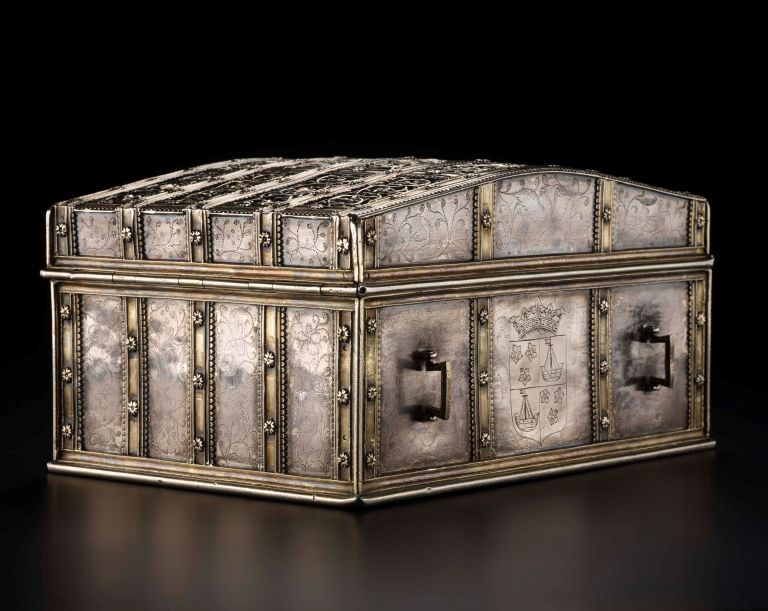
Made in Paris, probably between 1493 and 1510, the casket is a superb example of early French silver, very little of which survives today.
An infamous casket
It is believed that this is the infamous casket produced at a 1568 hearing ordered by Elizabeth I against Mary at Westminster. That casket contained the ‘Casket Letters’ – a set of love poems and letters, allegedly from Mary to her third husband, the Earl of Bothwell, which implicated them both in a conspiracy to murder her second husband, Lord Darnley. For centuries it has been valued as both a remarkable work of craftsmanship and an object closely connected to a pivotal moment in Scottish history.
At risk of loss
The casket has been owned by Lennoxlove House Ltd since the middle of the 20th century and was sold to help provide for the long-term maintenance of the house and its contents. With the risk of the casket being purchased by buyers overseas, National Museums Scotland was offered the opportunity to purchase it first.
On permanent display in Scotland
In 2022 we awarded £810,000 towards the £1.8million acquisition cost. Thanks to our funding, the casket is now on permanent display at the National Museum of Scotland and viewed by millions of visitors each year, including through the museum’s school programmes and community events. It takes centre stage in the Mary Queen of Scots section of the museum’s Scotland galleries. It has toured other venues in Scotland, helping more people across the UK connect with this important heritage.
Other funders
The sale, managed by Sotheby’s, was for £1,789,834. Funds also came from:
- Art Fund: £324,000
- National Museums Scotland Acquisitions Fund (provided by the Scottish Government): £200,000
- National Museums Scotland Charitable Trust: £250,000
- Other trusts, foundations and individual donors: £205,834