
From its size and combination of objects to the way it’s changing perceptions about the north of England and inspiring the people of Yorkshire – learn more about the ancient find we helped to keep in its home county.
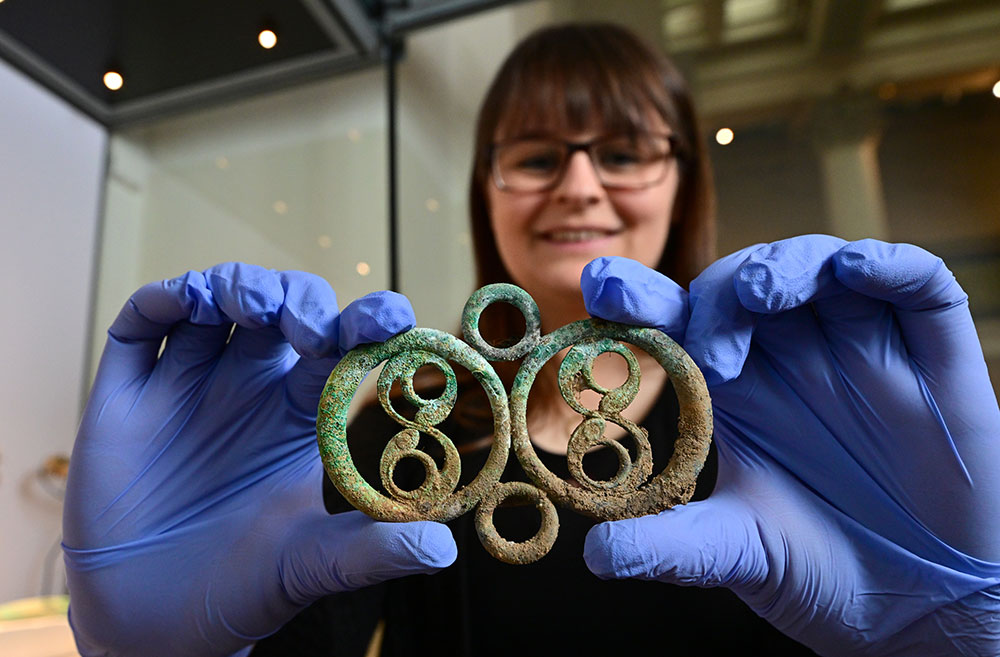
Sometime between 50BC and 50AD an Iron Age community in what is now Melsonby, in the north of England, did something which – 2,000 years on – is unique and unexplained.
In two different ditches, and believed to be in two separate acts, our ancient ancestors buried hundreds of metal objects.
As Emily North, Curator of Archaeology at the Yorkshire Museum, explains:
- One of the burials included 88 objects that were “intentionally threaded and tangled together and wrapped in a textile, perhaps animal fur”. This find is now affectionately known as ‘the block’.
- The other was a collection of 800 objects – including iron tyres, horse harnesses, spearheads, a cauldron and wine mixing bowl – that were “intentionally destroyed, bent out of shape and lots of them show signs that they were heated or burned on a fire”.
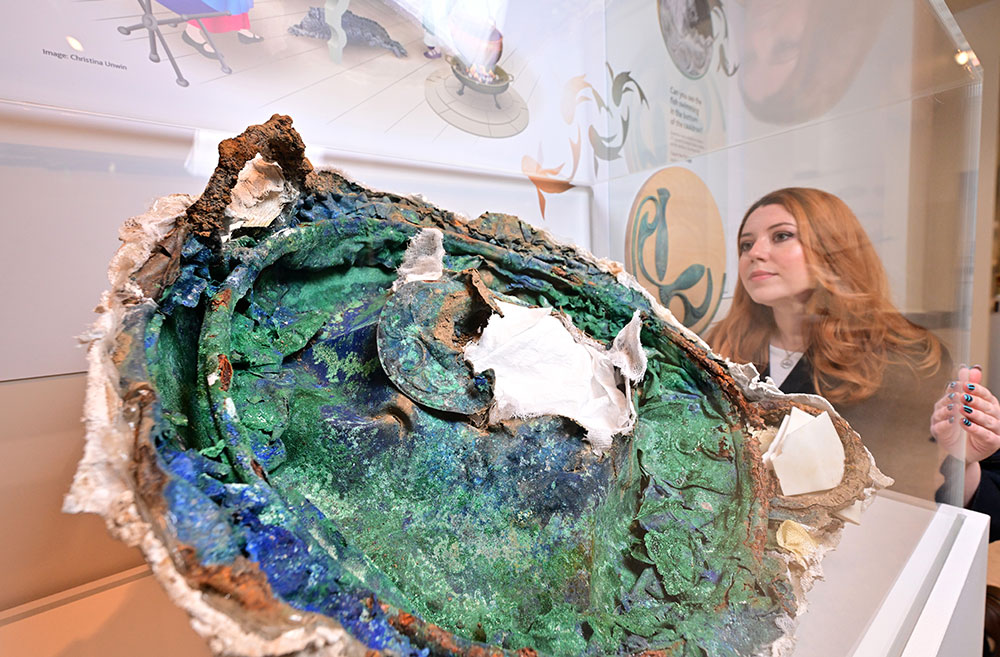
Emily says: “The objects that are within the hoard are really rare and it’s a pretty much unique combination. There’s so many elements about it that are fascinating and tantalising. You couldn’t imagine a more special hoard.”
How we helped save and share the Melsonby Hoard
In June 2025, we awarded York Museums Trust £192,096 to help it buy all these items and ensure they stayed in the county where they were buried for so long.
Less than a year later, the first exhibition of the Melsonby Hoard opened at the Yorkshire Museum. It was an incredibly quick turnaround, inspired by intense local interest and as a reward for those who also contributed to the purchase through an online crowdfunding campaign.
“The response was enormous and we wanted to give, particularly local people, a chance to come and see it as soon as possible. There was a real buzz. The number of times my colleagues on the front desk were asked ‘when can we see it’, it couldn’t be counted, really,” Emily says.
Some of the hoard items and what they reveal
The Chariots, Treasure and Power: Secrets of the Melsonby Hoard exhibition includes about 20% of the items we helped the museum acquire, which represent “the most complete and the most visually understandable and appealing parts of the hoard,” Emily says.
“What we've tried to emphasise in the exhibition is that we still have a lot more questions than answers and we're really at the very beginning of starting to try and understand the hoard.”
Some of the clues include –
A mirror
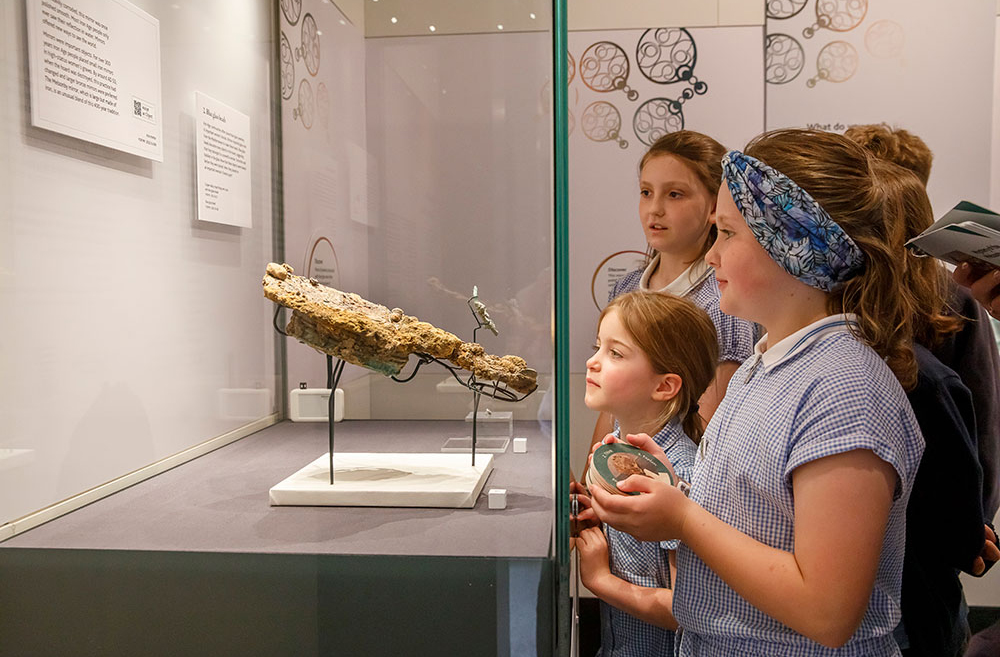
“Mirrors in the Iron Age are only ever found with female burials or cremations, usually of older women. But what’s odd is there were no human remains found at Melsonby.
“Researchers today believe mirrors were not vanity objects in the way that we use them now, not even functional because they would have distorted the reflection, but the female equivalent of a weapon that a man would use. It's a power and status symbol.”
The Melsonby Hoard mirror is one of only about 50 known to survive from Iron Age Britain.
Coral, beads and bling
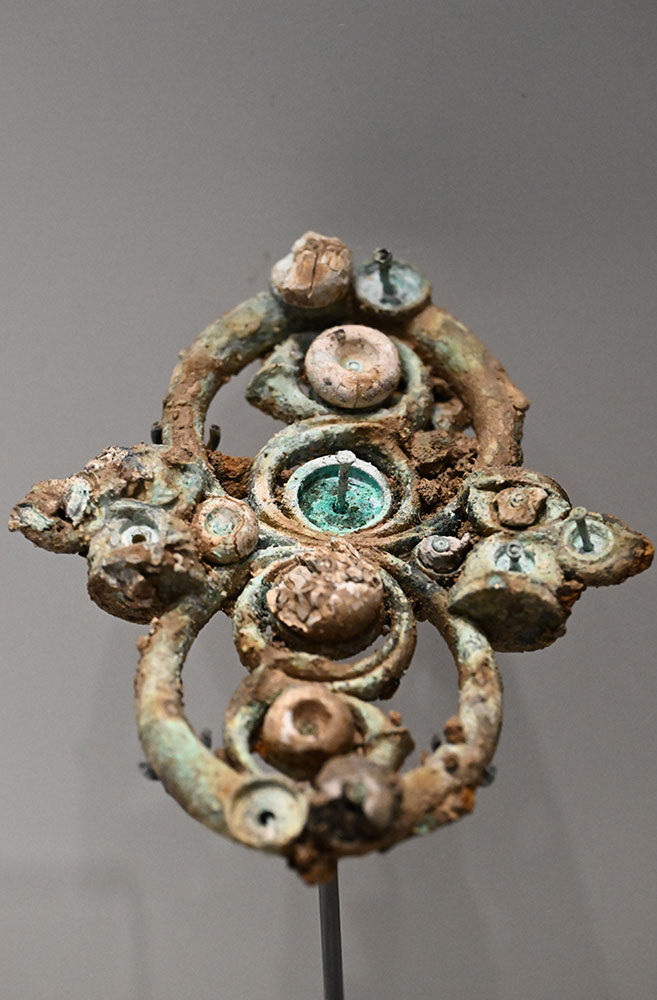
“What’s interesting at Melsonby is that they're decorating horse harness equipment. X-ray fluorescence evidence of the surfaces has shown that a lot of it was gilded or silvered. It was also decorated with red coral that would have been a bright pinky-red, as well as blue glass beads and a lot of enamel.
“I’ve got quite a vivid mental image of a procession of vehicles pulled by ponies and can just imagine the horses totally decked out – let alone what the people may have been wearing. It would have been a real spectacle,” Emily says.
Also among the Melsonby Hoard are the only Iron Age wagons ever found in Britain. In Europe, this type of four-wheeled vehicle has been discovered in high-status burials.
Evidence of travel and trade
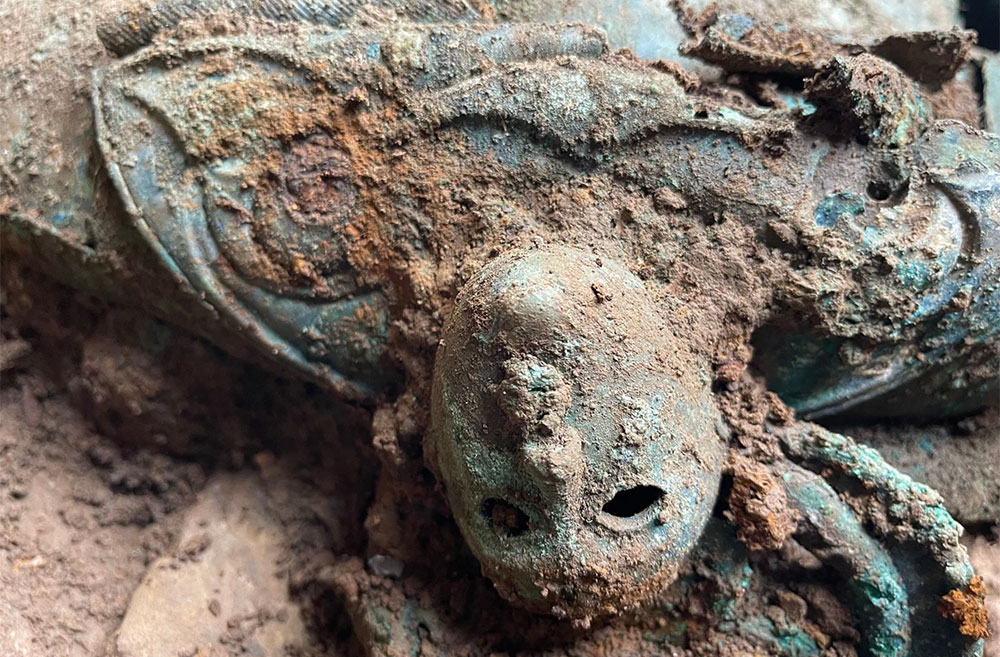
“The wine mixing bowl is a style of vessel that you only really find in Etruria (in modern-day Italy). It’s a Mediterranean vessel for drinking Mediterranean drinks, but it's made locally. We know that because the heads that decorate it are in an Iron Age British design style. So somehow the people making it and using it have seen one of these vessels and they've copied the style with a British element added into it. And presumably were drinking imported wines out it.”
How the hoard is changing perceptions and inspiring pride
Museum experts will continue to conserve and research the items to answer their many questions about the people who buried them and the culture in which they lived.
In the exhibition, visitors are presented with four theories to consider: a feast, a festival, a fight and a funeral.
Emily leans towards funeral, specifically, one for a powerful woman, perhaps a queen of the local Brigantes tribe, although “many of my colleagues disagree and have their own favourite theory”.
But what is clear is the outstanding heritage significance of the Melsonby Hoard.
Emily says: “There's been this idea that the south of Britain had much closer links to the Roman Empire prior to the Roman conquest and as a result was more sophisticated. The Melsonby Hoard has really challenged that.
“The people in the north of Britain and Yorkshire in the Iron Age were not living in some backwater. They absolutely had links with the wider world, had incredible skill to craft these beautiful luxury objects, had enough wealth to then destroy it all and put it into the ground and clearly had some complex motivations for doing so.
“It’s showing the north in a new light. It’s really captured people’s imaginations and ignited a lot of Yorkshire pride.”