
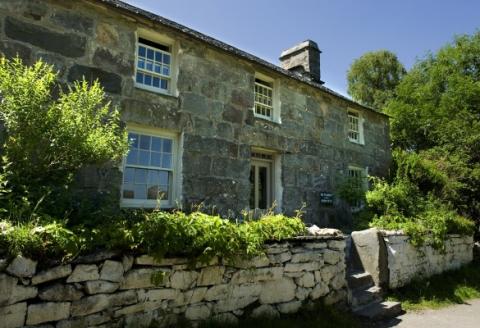
The home of First World War poet Hedd Wyn, and its nationally important collection, is protected for future generations.
An important site of literary and cultural history
Yr Ysgwrn in Gwynedd was the home of Hedd Wyn, one of the UK’s most significant First World War poets. Born Ellis Humphrey Evans into a farming family, he wrote poetry in Welsh that captured the human cost of war and became an important voice of a generation shaped by conflict.
Hedd Wyn was killed at the Battle of Passchendaele in 1917, just weeks after completing Yr Arwr (The Hero). The poem was awarded the bardic chair at the National Eisteddfod later that year. In commemoration of his death, the chair was draped in black cloth and became known as the Black Chair. It remains one of Wales’s most powerful symbols of loss during the First World War.
The Grade II* listed farmhouse has survived largely unchanged since Hedd Wyn’s lifetime. It contains the Black Chair and five other bardic chairs awarded to the poet, alongside the historic contents of the family home.
Keeping heritage accessible
When the owner could no longer continue farming the land, there was a risk the property and its contents could be sold separately. Our £350,423 grant, alongside support from the Welsh Government, allowed Snowdonia National Park Authority to acquire Yr Ysgwrn through a private sale.
This secured the house, its collection and its story as a single heritage asset, protecting an important place of connection to the First World War, Welsh language culture and literary history.
Yr Ysgwrn remains open to the public, giving people from across the UK the opportunity to explore Hedd Wyn’s home, learn about his life and see the Black Chair and other significant objects in the place where their story began.